
GREEN HYBRID GENERATOR · DUBAI & THE GULF
Green Hybrid Generator & Off-Grid Power
See how each site draws on solar power, batteries and standby generation.
Compare UAE off-grid and retrofit options for long roadside hoardings, farms, industry and mobile fleets, using site loads and a dated diesel benchmark.
- Replace suitable generator-only duties
- Reduce low-load engine operation
- Plan quieter battery-powered periods

Select power by business need
Choose who operates the site and who pays the bills. Compare the same service before and after adding storage.

Generator rental company
Who pays for fuel? In a Jebel Ali rental fleet the customer may buy every litre. Compare billed days, depot charging, transport and the higher hire margin of a battery–generator package.
Pair a mobile BESS with an existing genset. Log engine hours and fuel per billed shift. Enter only the fuel benefit your contract lets you keep.
View matching power flow · Calculate my billboard’s monthly diesel billAdvertising operator
A 50 m+ ground-mounted hoarding has a paid lighting window. Record sign length, fixture input watts, permitted light level, dimming hours and missed display hours.
For a printed face, put PV and storage in the rear service zone. For a digital screen, log playback brightness, cooling and peak kW; use a hybrid supply if solar area is insufficient.
View matching power flow · Outdoor LED screen · Calculate my billboard’s monthly diesel bill
Farm or guesthouse owner
At an Al Ain date farm, water and refrigeration matter more than nameplate kWh. Record pump starts, water tank capacity, cooling duty, seasonal irrigation and essential night loads.
Pump during solar hours; reserve battery energy for the cold room and guest loads. Compare equal water volume and cold-room service across both options.
View matching power flow
Oil & gas operator
On an Abu Dhabi onshore lease, fuel delivery and call-outs can outweigh pump price. Collect delivered invoices, service trips, motor starts and the critical auxiliary feeder list.
Scope the camp and utility feeders first. Coordinate PV, PCS and diesel dispatch; agree hazardous-area boundaries and restart tests with the operator.
View matching power flow
Quarry or aggregate producer
In the Hajar quarries, a crusher or conveyor restart can stop a shift. Record starting kVA, dust exposure, tonnes per shift, delivered litres and stoppage duration.
Keep the genset for sustained crushing. Test battery support against measured motor steps and recovery; compare fuel per tonne at equal throughput.
View matching power flow
EV charging operator
At an inter-emirate stop, arrivals and simultaneous ports determine service. Record delivered kWh/session, peak concurrent kW, rejected sessions and recharge time.
Size station storage for sessions between recharge windows. Use a power-sharing limit; value extra sales at contribution margin after incremental costs.
View matching power flow
Mobile emergency power operator
For a temporary outage, mobilisation time and verified autonomy govern selection. Record call-outs/year, critical kW, surge kVA, connection time and depot recharge cost.
Precharge a mobile BESS, isolate the affected feeder and support priority loads. Verify transfer, runtime, earthing and recovery on the actual site. Enter deployment days only.
View matching power flow
Existing grid-connected PV owner
A Dubai warehouse may already earn export credits. Obtain interval import/export data, actual credit, tariff, inverter firmware and the utility agreement before valuing storage.
Add AC-coupled storage, a PCC meter and export control as applicable. Deduct lost export credit and charging losses. Backup requires an approved islanding design.
View matching power flow
Existing generator owner
Keep the existing generator where it still earns its keep. Record fuel and hours at light and heavy loads, minimum loading, largest load step and control interface.
Add a bidirectional PCS, battery and synchronising control. Match before/after delivered kWh; test generator restart, reserve and reverse-power protection.
View matching power flowProduct reference · WWEE Infinity-HV-261K

The cabinet shown is from the WWEE C&I product sheet. Match the selected battery’s usable kWh, PCS continuous and surge rating, cooling load and site access to the measured duty. Confirm enclosure, BMS/PCS firmware and generator or PV-inverter interfaces before quoting.
Open the savings calculator
Complete the highlighted values to calculate.
- Annual fuel reduction (L)
- —
- Gross fuel saving (AED/year)
- —
- Net direct saving (AED/year)
- —
- Direct simple payback (years)
- —
- Additional business value (AED/year)
- —
- Net including optional benefit (AED/year)
- —
- Simple payback with optional benefit (years)
- —
- Fuel reduction vs baseline (%)
- —
Explore the power system for your site
Choose a site, then switch operating modes to see which equipment supplies the load and when the battery recharges.
Advertiser decision guide
Check the available module area, concession term and measured load before committing to the purchase.
Advertiser decision guide50 m hoarding · diesel-free lighting
A 50 m printed face, 13–15 AC floodlights at 600 W and two 400 W logo supplies. The rear array charges by day. At night the cabinet supplies both circuits. Dubai RTA §3.6 requires backlighting for hoardings in that category. Use the floodlight design only on sites expressly approved for it. For backlit signs enter metered AC input.

Calculate my billboard’s monthly diesel bill
Power flow
Sign and logo off. PV serves auxiliaries and charges the cabinet. EMS curtails PV at the upper SOC limit.
What does this billboard cost me in diesel each month?
Enter fuel only. Leave generator rental, repairs and separate delivery charges out.
What runs on my generator?
Enter AC input watts, quantity and daily hours for each load. A quantity of zero leaves it out. Start times determine which loads run together.
24-hour equipment runs every calendar day. Other rows run on advertising days. Blank uses the full month.
What size is my existing generator?
- Simultaneous AC load
- kW
- Peak generator load
- %
- Average fuel per engine hour
- L/h
- Engine hours this month
- h
- Diesel this month
- L
See the calculation by load level
Load ÷ prime kW gives load %. Read L/h on the published curves for each interval, then add L/h × engine hours. The monthly litres are priced once. The default assumes the engine stops when all loads turn off. For each load level, we interpolate between available published data points and use the median of the eligible models of this size. View generator curves and sources
| kW | % | L/h | h | L |
|---|
What would solar and storage cost for my billboard?
Compare ten-year ownership costs
Budget for purchase. The longest operating day in your equipment list sets the design load. With a fuel bill alone, the example equipment list provides the load until you edit it.
- Design day
- kWh
- Nominal battery
- kWh
- PV array
- kWp
Edit sizing assumptions
Sizing uses daily AC energy ÷ efficiency ÷ DoD, plus the nominal cooling allowance. For metered AC cooling, include it before both divisions. PV budget target = nominal kWh ÷ sun hours × margin factor. The budget rounds each size to the nearest whole unit; enter actual catalogue sizes for a quote.
When does the fuel saving repay the purchase?
Edit the savings assumptions
- Annual baseline diesel spend
- AED
- Annual net operating saving
- AED
- Simple annual ROI
- %
- Simple payback (years)
Dubai reference check. At 40 kWp, 183 kWh, 15 kW, south-facing 75° and 1 kW average cooling, the 2015–2023 hourly replay supplied 80.06% of energy with a new battery and 79.89% at 80% state of health. Year-round diesel removal was not achieved. Use residual fuel records or a dispatch study for the investment case.
Fuel-only scenario starts at full displacement and zero additional operating costs. Confirm year-round lighting with an hourly site study. Enter actual residual diesel, cleaning, service and replacement reserves through the assumptions. Simple returns exclude financing, discounting and residual value.
Hourly screening spreads cooling evenly over 24 hours and splits total conversion efficiency equally between charge and discharge. Check the actual thermal duty, DC compatibility, PV input limits, shade and cabinet rating on site.
What will this billboard cost over ten years?
Compare the same lighting hours in constant AED. Enter site bills and supplier quotes. A dash means a required amount or service term is missing. You can enter zero for a confirmed zero cost.
Site duty and cost of fuel
Baseline fuel follows the calculator above. With a bill alone, enter engine hours from the meter. Backup fuel can be set here or taken from the solar economics assumptions. Confirm zero only after verifying equivalent service.
Generator price, replacement and service
500 h is an editable Perkins reference. Use the exact engine manual and invoices. The earlier hour/calendar limit applies, starting immediately after service, with hours spread evenly. Replacement costs should exclude routine service already counted. Perkins
Battery cycles, equipment life and resale
Battery life is the earlier of cycle life and any calendar limit. Straight-line remaining life estimates PV and battery values. Set a net disposal quote or zero for a cash-only exit. Installation and other costs have zero residual; the inverter gains a residual only if a life is entered. Replacements use today's component price; enter extra labour/transport in other costs.
Complete these inputs to compare totals
- Scheduled diesel services
- Cycles in study
- PV remaining value (AED)
- Battery remaining value (AED)
| AED | Owned diesel | Owned solar |
|---|---|---|
| Initial purchase / opportunity cost | ||
| Diesel actually paid | ||
| Routine service | ||
| Other operation and repair | ||
| Equipment replacement | ||
| Mobilisation, moves and return | ||
| Terminal credit (deducted) | ||
| Net lifecycle cost | ||
| Present value of costs |
- Total savings with solar (AED)
Cash flow by year (AED)
| Year | Owned diesel | Owned solar |
|---|
Costs are paid at year-end except initial purchases and mobilisation. The final year includes disposal. Negative savings mean solar costs more. Blank component limits assume no scheduled replacement except where a cycle or hour life is required.
Compare the generator asking price with a signed quote covering delivery, service and taxes. HMG20KVA
Detailed fuel use, solar sizing and ownership costs
Lighting and lifecycle cost calculator
At 14 lights, the face draws 8.4 kW and the logos 0.8 kW. At 17:30–07:30 the total is 128.8 kWh before cooling. The three permitted counts give 120.4 / 128.8 / 137.2 kWh for 13 / 14 / 15 lamps.
Dubai sites and permits
PHI lists 80 m on Sheikh Zayed Road near Dusit and 100 m on Mohammed Bin Zayed Road. Hills lists hoardings on Expo Road and in Dubai South. These establish the physical format. The operators’ power source and fuel bills are unverified.
Equipment, monitoring and handover
Specify a WWEE outdoor liquid-cooled BESS, enclosure IP54 minimum. Obtain the SKU’s test report, hot-weather usable kWh, chiller input, warranty throughput and end-of-life capacity. Match grid-forming PCS, island-compatible PV inverter, fault protection, lighting inrush and phase balance. Check rear steelwork, wind, shadows, sand cleaning, access and drainage.
WWEE Infinity‑HV‑261K, Rev 4 design review: liquid-cooled DC cabinet, 261.248 kWh, 832 V, IP54 reference. One / three / four cabinets give 261.248 / 783.744 / 1,044.992 kWh nominal. Confirm approved DC combining, PCS and site BOM. Raising total auxiliaries from 0.25 to 1 kW adds 18 kWh/day.
Specify local seasonal scheduling and independent metering of sign, logo and cooling. EMS sends PV kWh, delivered lighting hours, SOC/SOH, cabinet temperature, alarms and missed minutes to the fleet portal. Require local control through a network outage, event buffering, low-SOC escalation and a witnessed full winter-night test. Agree alarm response and who credits missed lighting hours.
Compare the same lit hours and brightness. Use written quotes on one VAT basis. Blank commercial fields mean a quote is missing. Enter zero only for a verified zero or a service already included. Enter real AED at constant prices. Discount cash paid at year end. Replacement events are discounted on their due dates.

Solar + battery + diesel · microgrid
Keep a digital screen on its advertising schedule
Daylight brightness, video content and cabinet cooling change the demand. Measure the highest simultaneous draw and the daily playback profile separately.
Power flow
Arrows show active power flow. Grey paths are on standby.
Solar supplies the load. Surplus power recharges the battery while the controller preserves its charge limits.
- Equipment and controls
- PV inverter, grid-forming battery PCS, synchronised diesel and AC board. The EMS sets reserve and generator dispatch. A dedicated UPS can protect the player and router.
- What to measure on site
- Log screen area, measured W/m² by brightness, cooling, operating hours, peak kW and permitted interruption. Record litres and generator hours under the same playback schedule.
- Sizing example
- A 40 m² screen averaging 180 W/m² for 10 h uses 72 kWh for the screen alone. Add cooling and controls, then check peak kW separately.

Solar + battery · off-grid
Run irrigation by day and essentials overnight
Move water pumping and flexible work into sunny hours. Reserve stored energy for refrigeration, guest lighting and communications after dark.
Power flow
Arrows show active power flow. Grey paths are on standby.
Solar supplies the load. Surplus power recharges the battery while the controller preserves its charge limits.
- Equipment and controls
- PV, MPPT, battery with BMS and stand-alone inverter. Separate essential circuits from pumps. Use a compatible variable-speed drive or soft starter where needed.
- What to measure on site
- Record pump starting current, water storage, guest occupancy, refrigeration duty and the worst solar month. Agree which loads can wait through cloudy weather.
- Sizing example
- An overnight essential load averaging 1.5 kW for 10 h needs 15 kWh delivered. Battery reserve and conversion losses increase the nominal capacity required.
Solar + battery + diesel · microgrid
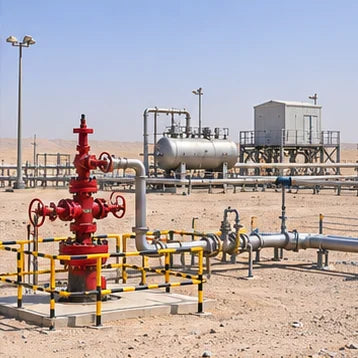
Supply Abu Dhabi field camps and utility pumps
On an Abu Dhabi onshore lease, fuel delivery and call-outs can outweigh pump price. Collect delivered invoices, service trips, motor starts and the critical auxiliary feeder list.
Power flow
Arrows show active power flow. Grey paths are on standby.
Solar supplies the load. Surplus power recharges the battery while the controller preserves its charge limits.
- Equipment and controls
- PV inverter, battery racks and grid-forming PCS, generator synchronising panel, feeder meters and microgrid EMS. Agree equipment location and hazardous-area classification with the operator.
- What to measure on site
- Collect 24-hour load traces, largest motor step, existing genset limits, delivered fuel cost, ambient temperature and critical feeder priorities.
- Sizing example
- A camp averaging 30 kW for a 6 h engine-off window needs 180 kWh at the loads. Starting a pump adds a separate short-duration kVA requirement.
Solar + battery + diesel · microgrid
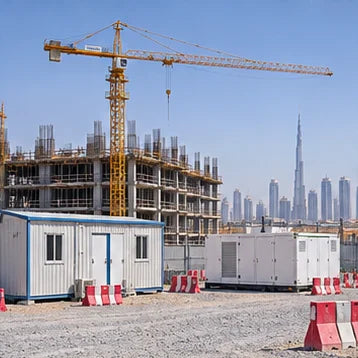
Handle lifting peaks and quiet night shifts
A crane lift lasts seconds or minutes. Cabin lighting, security and communications run for hours. Size for both duty cycles.
Power flow
Arrows show active power flow. Grey paths are on standby.
Solar supplies the load. Surplus power recharges the battery while the controller preserves its charge limits.
- Equipment and controls
- Mobile BESS and grid-forming PCS, PV inverter, diesel synchronising panel, temporary AC distribution and load logger. EMS schedules quiet hours and coordinates lift support.
- What to measure on site
- Log crane kVA, peak duration, regenerative braking behaviour, welders running together, night load and available PV space as the site moves.
- Sizing example
- An extra 60 kW for 5 minutes uses 5 kWh. The PCS still needs 60 kW of available headroom for the full lift, with motor kVA checked separately.

Solar + battery + EV charging · off-grid
Share available solar and storage across charging sessions
At a remote stop, the number of vehicles, energy per visit and time between arrivals determine how quickly a stationary battery must recover.
Power flow
Arrows show active power flow. Grey paths are on standby.
Solar serves an active charging session. Surplus power flows into stationary storage through the bidirectional converter.
- Equipment and controls
- PV MPPT, protected DC bus, stationary battery with bidirectional DC/DC, isolated DC charger and EV connector. The charger negotiates with the vehicle. EMS caps shared power.
- What to measure on site
- Record sessions/day, kWh/session, concurrent ports, vehicle voltage and connector, recharge window, shading and minimum station reserve.
- Sizing example
- 6 vehicles receiving 20 kWh each need 120 kWh delivered per day. Two simultaneous 30 kW ports can request 60 kW before conversion losses.
Solar + battery + diesel · DC site
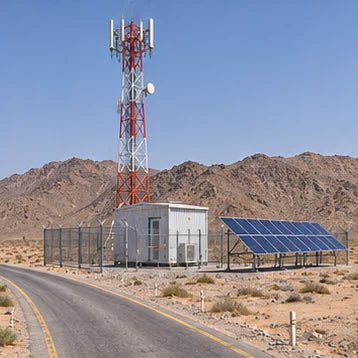
Keep the tower’s DC radio supply available around the clock
The radio and backhaul use the telecom DC bus. An AC diesel generator reaches that bus through a rectifier. Account separately for shelter cooling.
Power flow
Arrows show active power flow. Grey paths are on standby.
Solar supplies the load. Surplus power recharges the battery while the controller preserves its charge limits.
- Equipment and controls
- Telecom MPPT, −48 V DC plant, protected battery strings, rectifier modules, DC distribution and genset controller. Remote alarms cover battery, rectifier and fuel status.
- What to measure on site
- Log DC current over 24 h, peak radio traffic, maximum temperature, cooling supply, autonomy target, rectifier redundancy and access time for refuelling.
- Sizing example
- A continuous 2 kW DC load needs 48 kWh per day. An 8 h battery reserve must deliver 16 kWh, plus allowances for losses, temperature and ageing.
Solar + battery + diesel · microgrid
Support motor starts at a Hajar aggregate quarry
Keep the genset for sustained crushing. Test battery support against measured motor steps and recovery; compare fuel per tonne at equal throughput.
Power flow
Arrows show active power flow. Grey paths are on standby.
Solar supplies the load. Surplus power recharges the battery while the controller preserves its charge limits.
- Equipment and controls
- Meter the crusher, conveyor and camp separately. Use PV inverter, grid-forming BESS, diesel synchronisation and motor protection; confirm PCS overload duration and dust filtration.
- What to measure on site
- In the Hajar quarries, a crusher or conveyor restart can stop a shift. Record starting kVA, dust exposure, tonnes per shift, delivered litres and stoppage duration.
- Sizing example
- An extra 100 kW for 3 minutes needs 5 kWh. Confirm the larger short-term kVA rating with the motor drive and PCS supplier.
Mobile battery · isolated backup
Deploy a charged battery to an isolated critical feeder
Precharge a mobile BESS, isolate the affected feeder and support priority loads. Verify transfer, runtime, earthing and recovery on the actual site. Enter deployment days only.
Power flow
Arrows show active power flow. Grey paths are on standby.
At the depot the AC charger replenishes the battery. The site-load output is disconnected.
- Equipment and controls
- Mobile battery, BMS, on-board AC charger, grid-forming inverter, interlocked inlet/changeover and critical-load distribution.
- What to measure on site
- For a temporary outage, mobilisation time and verified autonomy govern selection. Record call-outs/year, critical kW, surge kVA, connection time and depot recharge cost.
- Sizing example
- A 20 kW essential load for 4 h needs 80 kWh delivered. Allow for reserve, conversion losses, recharge and return to readiness.
Grid-connected PV retrofit
Add storage to an operating grid-tied PV plant
Add AC-coupled storage, a PCC meter and export control as applicable. Deduct lost export credit and charging losses. Backup requires an approved islanding design.
Power flow
Arrows show active power flow. Grey paths are on standby.
With grid present, rooftop PV serves the building and charges storage with surplus. The PCC meter supervises import/export.
- Equipment and controls
- Existing PV inverter, AC-coupled bidirectional PCS, protected battery, point-of-connection meter and EMS. Confirm export settings and whether the existing inverter supports any proposed island operation.
- What to measure on site
- A Dubai warehouse may already earn export credits. Obtain interval import/export data, actual credit, tariff, inverter firmware and the utility agreement before valuing storage.
- Sizing example
- Diversion of 100 kWh of surplus PV at 90% AC round-trip efficiency delivers 90 kWh later. Compare avoided purchase on 90 kWh with lost export credit on 100 kWh.
Diesel generator retrofit
Retrofit a running diesel site with battery storage
Add a bidirectional PCS, battery and synchronising control. Match before/after delivered kWh; test generator restart, reserve and reverse-power protection.
Power flow
Arrows show active power flow. Grey paths are on standby.
The running genset feeds the load and uses available capacity to recharge storage within its charge limits.
- Equipment and controls
- Bidirectional grid-forming PCS, battery and BMS, generator start/sync controller, protected AC board, fuel meter and run-hour logger.
- What to measure on site
- Keep the existing generator where it still earns its keep. Record fuel and hours at light and heavy loads, minimum loading, largest load step and control interface.
- Sizing example
- A 15 kW overnight duty for 6 h needs 90 kWh delivered. Calculate avoided litres from matched fuel logs; include diesel burned to recharge the battery.
Illustrative operating modes and loads. Final ratings depend on site measurements, climate and the selected equipment.
More applications and retrofits
Mobile BESS for events & rental fleets
03Provide battery-powered periods for outdoor events, live production and hospitality areas without an engine running beside the audience.
System approach & project checks
- System approach
- Use a transportable battery/PCS package, agreed distribution and a recharge plan. Charge at the depot or combine with a generator on site. Separate stage, LED, audio, catering and HVAC loads. Long events may need hybrid charging or a planned battery rotation.
- Before sizing
- Load-by-time schedule, peak kVA, quiet periods, show duration, recharge access, transport limits and fleet turnaround.
- Prove at handover
- Full rehearsal, step-load response, runtime reserve, restart/backup sequence and safe load connections.
Existing generator & weak-grid upgrades
08Keep useful assets and target low-load running, constrained supply or surplus daytime solar.
System approach & project checks
- System approach
- Audit generator start/stop interfaces, ratings, fuel curve and PV/grid controls before selecting storage. Use a compatible transfer or parallel architecture. Grid-connected PV does not automatically continue operating during an outage; islanding needs an engineered grid-forming system.
- Before sizing
- Existing single-line diagram, make/model, service history, export limits and measured demand/solar curves.
- Prove at handover
- Interlocks, reverse-power prevention, island/grid transitions and recovery after a failed generator start.
Four ways to change how the site is powered
A battery stores energy; it must be recharged. Select the source strategy before selecting the battery cabinet. These are functional concepts; final electrical design, protection and operating logic are project-specific.
01 · Solar + battery replacement
Best investigated for predictable loads with enough PV area, recharge energy and autonomy. Verify seasonal shortfalls and the required availability before removing the generator.
02 · Solar–battery–generator hybrid
Solar and storage reduce engine duty when conditions permit. The generator supports the load and recharge within an agreed control strategy. Automatic start thresholds, reserve and minimum run time must be set together.
03 · Mobile battery power
Shift charging to a depot or a suitable on-site source. Match the event energy budget, reserve, connector rating and recharge turnaround. Battery operation has no local engine exhaust; total emissions depend on the charging source.
04 · Limited-grid + storage
Assess demand support, backup and solar self-consumption against the connection limit and tariff. Export control, outage behaviour and approvals depend on the selected architecture and local rules.
Equipment packages built around the duty
Define kW for power and kWh for duration separately. Our sourcing brief brings batteries, conversion, controls and delivery responsibilities together; exact models, availability and supplier commitments belong in the quotation.
Solar-storage packages
PV, mounting, battery, inverter/MPPT, protection and scheduled-load control for fixed advertising and lighting.
Hybrid retrofit packages
Battery/PCS, compatible generator interface, EMS, metering, transfer or synchronising equipment and commissioning scope.
Mobile BESS packages
Skid or trailer configuration, thermal management, transport/lifting provisions, protected distribution and fleet monitoring requirements.
Modular site microgrids
Coordinated generation, storage, renewable input, load priorities and expansion planning for industrial support facilities.
Designed around Gulf operating conditions
Heat & auxiliary loads
Check the selected equipment’s output at site temperature, cooling energy, shading and ventilation. Include air-conditioning in camp and event load profiles.
Dust, salt & solar access
Review enclosure suitability, filtration, corrosion exposure, PV cleaning access, shading and seasonal solar yield.
Power quality & continuity
Confirm voltage, frequency, phase balance, motor starting, LED inrush and acceptable interruption. UPS-grade transfer requires a verified design.
Access, safety & support
Agree lifting, transport, fire separation, earthing, protection, local approvals, spare parts and the responsible commissioning team.
One coordinated brief. A measurable result.
LED Screen Union coordinates the supply-chain brief across energy equipment suppliers, generator specialists and the site delivery team. The proposal must name who designs, supplies, installs, tests and supports each part.
Measure
Record representative load, generator fuel use, runtime and site conditions. Include a full operating cycle.
Compare
Model solar-storage, generator-battery and mixed-source options against the same delivered service.
Integrate
Agree the bill of materials, single-line diagram, controls, transport, installation and service boundaries.
Verify
Test starting, charging, transfer, alarms and recovery. Compare logged litres, kWh and engine hours with the baseline.
Questions to answer before you replace a generator
Can a battery completely replace my generator?
Only when the load, usable battery energy and dependable recharge source meet the required duration and availability. Long continuous loads, limited solar area or extended poor weather may favour a hybrid system with retained generation.
Why are LED screen power and energy different?
Peak kW determines supply capacity; average demand across brightness, content and operating hours determines kWh. Nameplate peak power alone can overstate daily energy, while average power alone cannot establish safe supply capacity.
Does a 50% reduction in engine hours mean 50% less fuel?
No. Fuel depends on loading, charging, losses and the generator’s fuel curve. Compare measured litres and delivered kWh for equivalent service, not engine hours alone.
Can you upgrade an existing diesel or gas generator?
A review must confirm the model, rating, start/stop interface, charging load, protection and approved transfer or parallel operation. Retaining a useful generator may be more practical than replacing every asset.
Can mobile storage power a whole large event?
It depends on peak demand and total event energy, including HVAC and catering. A battery may cover quiet periods or selected zones; a long or high-load event may need multiple units and coordinated recharging or hybrid generation.
Are rental and installation included?
The business supports equipment sourcing and solution planning for end users and rental fleets. Local hire, transport, crew, electrical installation and operation must be expressly included in the quotation.
What should a fuel-saving proposal prove?
It should state the baseline load/service, fuel measurements, charging source, control assumptions, auxiliary consumption, added costs and acceptance method. Calendar-based maintenance and battery lifecycle costs must still be considered.
How do we start if no load survey is available?
Send generator nameplates, operating hours, fuel invoices or logs, the equipment list and site photos. These support an initial screening; measurement and site review are needed before a firm design or savings commitment.
Tell us what the site needs to power
Send a load list, a recent fuel/runtime log and site photos if available. Start with what you know; the first review identifies missing information and the most suitable configuration to investigate.